On the Gradient Domination of the LQG Problem
arXivPreprint · 2025
Establishes gradient domination for partially observed LQG through a finite-history input/output controller parameterization, with model-based and model-free convergence guarantees.
ABOUT
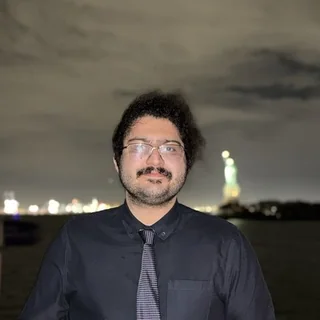
Ph.D. Candidate in Electrical Engineering
Columbia University · New York
I am a Ph.D. candidate in Electrical Engineering at Columbia University, advised by Professor James Anderson.
Previously, I completed my Master of Applied Science at the University of Waterloo, where I was supervised by Professor Ravi Mazumdar. I was awarded the Graduate Research Studentship (GRS) and the International Master’s Award of Excellence (IMAE). I received my Bachelor’s degree in Electrical Engineering from Sharif University of Technology in Tehran, Iran, graduating with distinction.
RESEARCH INTERESTS
I develop theory and algorithms for learning and reliably controlling dynamical systems under uncertainty, with applications to feedback control, generative models, and neural dynamics.
Interactive: the cart-pole at right changes with each research direction while feedback keeps it upright.
LEARNING FOR CONTROL
When can controllers be learned efficiently, generalized across systems, and remain reliable under uncertainty or adversarial corruption?
arXivPreprint · 2025
Establishes gradient domination for partially observed LQG through a finite-history input/output controller parameterization, with model-based and model-free convergence guarantees.
* denotes equal contribution.
CDCIEEE Conference on Decision and Control · 2026
Learns a shared lifted controller across heterogeneous LQG tasks and relates transfer performance and generalization to task similarity.
L4DCLearning for Dynamics & Control · 2026
Combines local identification, clustering, resilient aggregation, and certainty-equivalent control to obtain multitask adaptive guarantees under heterogeneity and adversarial corruption.
INFERENCE-TIME CONTROL
How can pretrained generative and representation dynamics be reliably steered at inference time under constraints, uncertainty, and distribution shift?
* denotes equal contribution.
ICLRUnder review · 2027
Casts constrained flow-matching inference as an optimal-control problem and develops receding-horizon primal–dual methods with finite-horizon guarantees.
ICLRUnder review · 2027
Models transformer representations as a finite dynamical system and develops a robust-control notion of steerability for reliable interventions under distribution shift.
GEOMETRY · NEURAL COMPUTATION
What low-dimensional structure organizes neural dynamics, and how can that structure be used to understand or shape neural computation?
NeurIPS2026
Connects oscillatory neural field dynamics to low-dimensional manifold geometry using lag embeddings, autoregressive structure, and topological signatures.
ICLRUnder review · 2027
Transfers closed-loop and robust-control principles from neural stimulation to language-model representation dynamics, linking biological and artificial neural intervention under distribution shift.
PHYSICAL SYSTEMS
How can physical structure be exploited to make nonlinear optimization and predictive control tractable and efficient?
CDCIEEE Conference on Decision and Control · 2026
Unifies optimal current-reference design across operating regimes for wound-rotor synchronous machines through a structure-aware optimization framework.
SAESIEEE/CCAE Small and Smart Electrical Systems · 2026
Embeds an enhanced WRSM model in linear-parameter-varying model predictive current control to handle nonlinear machine behavior and operating constraints.
SELECTED PUBLICATIONS
Selected work across control theory, learned systems, neural dynamics, and predictive control. An asterisk denotes equal contribution.
CDCIEEE Conference on Decision and Control · 2026
L4DCLearning for Dynamics & Control · 2026
ICLRUnder review · 2027
NeurIPS2026
CDCIEEE Conference on Decision and Control · 2026
SAESIEEE/CCAE Small and Smart Electrical Systems · 2026
CONTACT
For research questions or potential collaborations, feel free to reach out.
kasra.fallah@columbia.edu ↗